
WyrmWild: Monster Trail Global
Maw3id موعدRole Playing
4.2315.00 Reviews
- Version
- 1.1.3
- Installs
- 50.00K
- Age Rating
- Teen
Screenshots
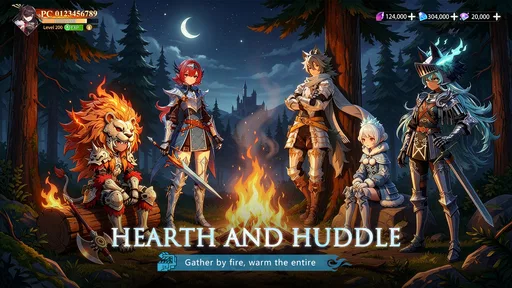

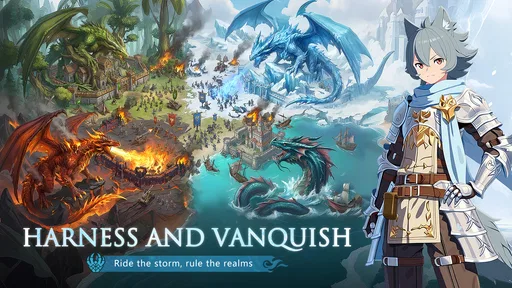
Our Review of WyrmWild: Monster Trail Global
 Analysis by Appyee
I went into WyrmWild: Monster Trail Global expecting a straightforward creature-collecting role-playing game, but what stayed with me was its repeating rhythm: take an action, see how the wild responds, gain something useful, then decide whether to stop or begin another run. That rhythm is the real personality of the game. It is not trying to be a quiet menu-based collection app, nor does it feel like a traditional story-heavy adventure. Instead, it places the appeal in the small decisions made while pursuing, managing, and developing wild creatures.
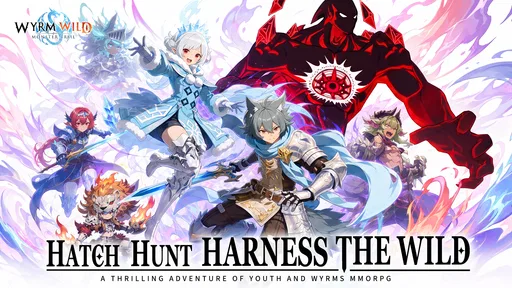
The game is free to start, which makes it easy to test without committing money immediately. It comes from Maw3id موعد and sits in the role-playing category, with a Teen content rating. Its current version is 1.1.3, and it runs on devices using Android 9 or later. The store page presents it with a short identity, “WyrmWild,” and the broader phrase “Hatch, Hunt, Harness the Wild,” but the more useful way to understand it is as a game built around repeated expeditions and the choices that follow them.
My recommendation depends heavily on what you want from a mobile RPG. If you enjoy checking a collection, improving a team, and returning for another compact objective, this has a welcoming structure. If you need a deep story, fast competitive combat, or a completely uninterrupted experience without purchase prompts, I would be more cautious. The game’s best moments come from its loop, not from pretending to be everything at once.
How the first action sets the whole game in motion
The first meaningful decision is not simply opening a menu and claiming a reward. It is choosing to step into the wild with a purpose. That purpose might be finding a creature, progressing toward a stronger roster, or preparing for the next challenge. The important point is that the game gives the player a reason to act before the reward appears. I found that distinction useful because it makes each session feel like a small expedition rather than a sequence of disconnected taps.
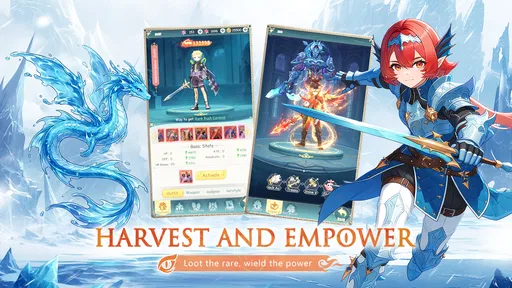
The hunting theme works best when I treated every outing as information gathering. Instead of thinking only about whether I had obtained something immediately, I paid attention to what the encounter suggested about my current preparation. A creature that looked appealing could still be a poor short-term choice if it did not fit the direction of my developing group. That creates a gentle layer of planning without making the opening hours feel like a spreadsheet.
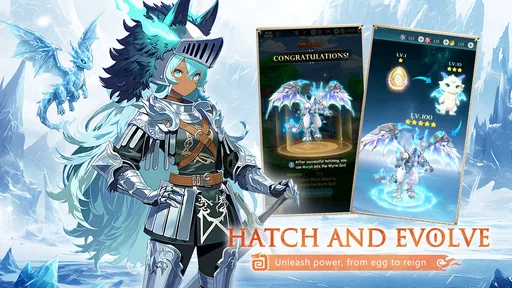
Hatching adds a different kind of anticipation. Hunting is active and immediate; hatching is more about waiting for a result and deciding what to do with it afterward. Those two activities complement each other well. One creates the feeling of discovery in the moment, while the other gives the collection a sense of continuation. I liked that the game’s identity is not limited to finding monsters in one way.
A useful approach is to begin each session with one clear target instead of trying to improve everything simultaneously. I might focus on finding a particular kind of addition, strengthening a weak part of the roster, or simply using the available activity to make progress. This prevents the early game from becoming a blur of icons and rewards. The more deliberately I entered a session, the more satisfying the outcome felt.
That advice matters because a creature-collection RPG can easily turn into an inventory exercise. WyrmWild avoids that feeling when the player connects each action to a future decision. The question is not only “What did I get?” but also “What does this let me attempt next?” That second question is where the role-playing element becomes tangible.
Action feels better when the goal is narrow
I would not approach this as a game that demands a long uninterrupted evening. Its structure is more comfortable when I set a small goal and let the result shape the next one. For example, a short session can begin with improving one creature, continue with a hunt, and finish by reviewing whether the new find changes the group. That sequence creates a complete miniature story even when the overall journey is still developing.
The trade-off is that players who prefer constant dramatic escalation may find the opening less exciting. The game’s satisfaction is cumulative. A single action may not feel remarkable, but the consequence of several sensible choices becomes easier to notice. I recommend giving it time to establish that pattern rather than judging it only by the first few minutes.
There is also a practical reason to keep goals narrow: it makes the free-to-play structure easier to evaluate. When I know exactly what I am trying to accomplish, I can tell whether normal progress feels rewarding or whether I am being pushed toward an optional purchase. The game includes in-app purchases ranging from $0.49 to $99.99 per item, so maintaining that awareness is important for anyone who wants to play without spending.
The feedback rhythm: action, response, and adjustment
The strongest part of the experience is the feedback that follows an action. I do something in the wild, receive a result, and immediately have a reason to inspect or use it. That response keeps the game moving. Even when the outcome is not the exact creature or improvement I wanted, it still contributes to the next choice. A good collection RPG needs this sense of forward motion, and WyrmWild generally understands it.
The feedback is not only about winning. It also comes from seeing how a new creature affects the shape of the roster. A new addition can make an older member feel less central, reveal a gap in preparation, or encourage me to reconsider which creatures deserve attention. This is a more interesting reward than simply filling an empty slot, because it changes the way I look at the rest of the collection.
I found the game most engaging when I resisted the urge to judge every result in isolation. A single hunt may produce a modest improvement, but several modest improvements can prepare the team for a more ambitious attempt. That is the kind of feedback that rewards patience. It also means the game is better suited to players who enjoy gradual optimization than to people who want every action to produce a dramatic upgrade.
One non-obvious strength is how the loop encourages comparison between immediate usefulness and long-term potential. The creature that helps right now may not be the one I want to invest in later. Keeping both possibilities in mind makes collection decisions more thoughtful. I learned to avoid treating every new find as an automatic replacement, because sometimes the better choice is to preserve flexibility until the roster’s needs become clearer.
Another helpful habit is to review the group after a meaningful reward rather than rushing straight into another activity. That pause turns feedback into strategy. I can ask whether the new addition improves the current setup, whether resources should go elsewhere, and whether the next outing should pursue a different objective. Skipping that review makes the game feel repetitive; using it makes the same actions feel connected.
Where the rhythm can lose energy
The loop is not equally compelling for everyone. If the available activity does not produce a result that changes my plans, the next session can feel like maintenance. That is a common weakness in collection-focused games, and it appears here whenever I repeat an action without a clear reason. The solution is not necessarily to play longer, but to vary the goal or stop before the routine becomes automatic.
Players should also expect the value of a reward to depend on context. A new creature is exciting at first, but the excitement fades if the collection becomes crowded with additions that do not affect decisions. I preferred sessions where I had room to consider why a find mattered. That makes the game less about accumulating everything and more about building a collection with a purpose.
The Teen rating is worth keeping in mind for families. It places the game outside the category I would casually hand to a very young child without checking the content and purchase settings first. For a teenager or adult who already enjoys role-playing and creature-collection themes, that rating is less of a concern, but parents should still treat the in-app purchase range seriously.
Reward: why the next result matters
Rewards work here because they connect directly to future action. A successful hunt is not merely a notification to dismiss; it gives me something to assess, develop, or use as a reason to return. Hatching has a similar effect, though its appeal is more anticipatory. The reward is strongest when it changes what I believe the next session should be about.
I especially liked the moments when a reward made an earlier decision feel worthwhile. Choosing to improve a creature before heading back into the wild can make the later result feel earned, even if the game does not present a dramatic narrative around it. That relationship between preparation and discovery gives the role-playing layer practical meaning.
At the same time, the reward system requires restraint from the player. Because the game is free to play and offers optional purchases, it is easy to look at a desired improvement and wonder whether spending would shorten the wait or smooth the path. I would advise treating purchases as optional convenience rather than part of the basic plan. The game is more satisfying when I first understand what ordinary progress feels like.
This is also where WyrmWild differs from a purely idle collection game. In an idle title, the main pleasure may come from returning to claim accumulated progress. Here, the reward has more value when it sends me back into an active decision. Compared with a story-led mobile RPG, however, the emotional payoff is quieter. The game asks me to care about the development of my collection rather than presenting a large cast of characters and plot turns.
For a player who likes measurable personal improvement, that trade-off is attractive. I can see the effect of better choices in the way I approach the next outing. For someone who needs a strong narrative reason to continue, the reward may feel thinner. Neither style is automatically better; they simply serve different expectations.
A practical way to handle rewards
I recommend separating rewards into three mental groups: something that helps immediately, something worth developing later, and something that is mainly useful as collection progress. This simple classification prevents every new result from demanding the same attention. It also reduces the temptation to spend resources impulsively just because a new creature has appeared.
That approach is particularly useful during an everyday session. Imagine having a few minutes while waiting for an appointment. I could enter with the goal of completing one hunt, inspect the result, and make one roster adjustment before putting the phone away. If the reward creates a clear next step, I can return later with a plan. If it does not, I have still completed a self-contained activity instead of getting trapped in an aimless grind.
The best reward is therefore not always the rarest or most powerful-looking result. It is the one that gives the collection a new direction. WyrmWild is at its most enjoyable when I let that direction emerge naturally rather than trying to force a perfect roster immediately.
Session reset: knowing when to stop and why to return
The reset between sessions is an important part of the design. I do not mean a literal restart; I mean the moment when I finish an outing, look at what changed, and decide what the next outing should accomplish. That reset keeps the game from becoming one endless chain of actions. It gives progress a shape and makes returning feel intentional.
I found it helpful to end a session after a meaningful decision rather than after every available activity had been exhausted. For example, once a new creature has been added and I have decided whether to develop it, the session already has a natural stopping point. Continuing beyond that can be useful, but it is no longer necessary to feel that I made progress.
This style suits mobile play particularly well. A short break can contain one complete loop: choose an objective, act, receive feedback, and make a roster decision. Longer sessions are possible for players who want to explore more deeply, but the game does not need to dominate the day to provide value. That flexibility is one of its more practical strengths.
The reason to begin another session should come from a changed situation. Perhaps the previous reward opened a new possibility, a creature needs attention, or the current group is ready for a different kind of challenge. If I return only because a timer or routine tells me to, the experience becomes less personal. If I return because I have a question I want answered, the loop feels much stronger.
This is where I would advise skipping the game if you dislike repetition at its foundation. The action-feedback-reward-reset cycle is not a temporary tutorial structure; it is the central way the game creates momentum. Players who enjoy repeating a familiar activity with gradually improving results may find it relaxing. Players who need constant new mechanics may eventually want a more expansive RPG.
Who will get the most from it
WyrmWild is a good fit for someone who enjoys creature collecting but wants more involvement than simply opening reward screens. It also suits players who like making small roster decisions and watching those decisions influence future outings. The free entry point makes experimentation easy, while the current version gives the game a defined starting point for anyone joining now.
I would recommend it to a teenager or adult who likes compact role-playing sessions, gradual collection growth, and the satisfaction of returning to a developing group. It can also work for a busy player who prefers several short visits instead of one long campaign. The game’s identity is clear enough that you do not need to invent a complicated personal challenge to enjoy it.
I would be less likely to recommend it to someone seeking a cinematic adventure, a heavily scripted story, or a competitive game where every match tests reflexes against another human. It is also not my first choice for a player who wants a completely purchase-free environment. The optional price range is broad, so anyone sensitive to monetization should decide in advance whether they are comfortable ignoring those offers.
Another group that may want to skip it is the player who dislikes managing a growing collection. The hunting and hatching themes naturally create more creatures to consider, and that only feels rewarding if organization and comparison are part of the fun. If your ideal RPG is about controlling one hero through a fixed sequence of battles, this game’s collection-centered structure may feel like a distraction rather than a benefit.
My verdict on the complete loop
After spending time with it, I see WyrmWild as a focused mobile role-playing game built around a simple but effective question: what did this action change? The first action sends me into the wild, the feedback tells me how the collection is developing, the reward creates a new possibility, and the reset gives me a reason to choose the next session instead of playing without direction.
That loop is more convincing than the short store wording might suggest, but it has clear boundaries. The game’s appeal depends on accepting gradual progress and finding satisfaction in roster decisions. It does not replace a story-heavy RPG, and it should not be approached as a nonstop action game. Its strength is the space between discovery and planning.
The community response is encouraging: it holds a 4.2 average from around 1.8 thousand ratings, with more than 300 written reviews, and has passed 50 thousand installs. Those figures suggest that the central idea has found an audience, though they do not change the personal question every player should ask: do I enjoy repeating a collection loop when each result slightly changes my next choice?
For me, the answer is yes, especially when I enter a session with a narrow objective and stop after making a useful decision. I would keep spending optional, treat every reward as information rather than an automatic upgrade, and avoid playing past the point where the loop becomes mindless. Used that way, the game feels relaxed but purposeful.
My final recommendation is to try it if you want a creature-focused RPG whose progress comes from repeated, understandable choices. The free starting point lowers the risk, while the Teen rating and optional purchases make it worth approaching thoughtfully. It is not the right choice for every RPG fan, but for players who enjoy hunting, hatching, improving, and returning with a fresh goal, it offers a clear reason for one more session.
Verdict
Strengths of WyrmWild: Monster Trail Global
- Monster-collecting gameplay is easy to understand for newcomers.
- Exploration gives the adventure a satisfying sense of discovery.
- Monster designs add personality and visual variety to the roster.
- Short play sessions make it suitable for mobile gaming.
- Progression provides clear goals beyond simply catching monsters.
Limitations of WyrmWild: Monster Trail Global
- Some encounters may feel repetitive after extended play.
- The game can require patience when building a stronger team.
- Menus and systems may take time to understand fully.
- Later challenges can create noticeable difficulty spikes.
- Performance may vary depending on the device and settings.
Similar Picks in This Category
View All
Hair Dye
CrazyLabs LTD4.4

Monster High™ Beauty Salon
CrazyLabs LTD4.5

Bus Simulator - Bus Games 3D
Jima Apps4.4

Flight Pilot: 3D Simulator
Wildlife Studios4.1


Super Stylist Fashion Makeover
CrazyLabs LTD4.4
Frequently Asked Questions
What is WyrmWild: Monster Trail Global about?
WyrmWild: Monster Trail Global is a monster-collecting adventure game in which you explore a colorful world, discover unusual creatures, and build a team for battles and progression. The experience combines exploration, creature training, combat, and collection features. Before downloading, players should expect a game designed around gradual progression, frequent team management, and learning each monster’s strengths, weaknesses, and abilities.
Is WyrmWild: Monster Trail Global free to download and play?
The game can generally be downloaded without an upfront purchase, but players should check the store listing for the latest availability and regional conditions. Like many mobile collection games, it may include optional in-app purchases for items, resources, or progression-related benefits. You can usually begin playing for free, although advancing faster or collecting certain content may require spending money or investing more time.
Does WyrmWild: Monster Trail Global require an internet connection?
Players should be prepared to use an internet connection for important parts of WyrmWild: Monster Trail Global. Online access may be needed for account synchronization, event content, updates, advertisements, purchases, or server-based gameplay features. Even if some exploration or menu functions appear accessible offline, the complete experience may not work correctly without a stable connection, so it is best suited to online play.
Is WyrmWild: Monster Trail Global suitable for beginners?
WyrmWild: Monster Trail Global is approachable for newcomers, especially if you enjoy creature-collection games and are willing to learn through the early tutorials. The game introduces its main systems gradually, but there can still be several menus, upgrade options, combat decisions, and team-building choices to understand. New players should focus on completing introductory objectives, improving a balanced team, and avoiding unnecessary resource spending at the beginning.
What devices are compatible with WyrmWild: Monster Trail Global?
Compatibility depends on the current Android and iOS store requirements, which can change as the game receives updates. Before installing, check the official listing for the minimum operating-system version, available storage, and device requirements. A newer phone or tablet is recommended for smoother loading and better stability, while older devices may experience longer loading times, reduced performance, or limited access to some visual features.
Play our best games!


